Someone asked me this week how to actually get better at MIDI and music production. Not "which plugin should I buy" — just, how do you actually improve. There's no shortcut. But there are seven things that genuinely move the needle, and none of them cost anything.
1. Learn Chords by Taking Apart MIDI You Already Have
You don't need a music theory course to learn chord progressions. You need a MIDI file and fifteen minutes.
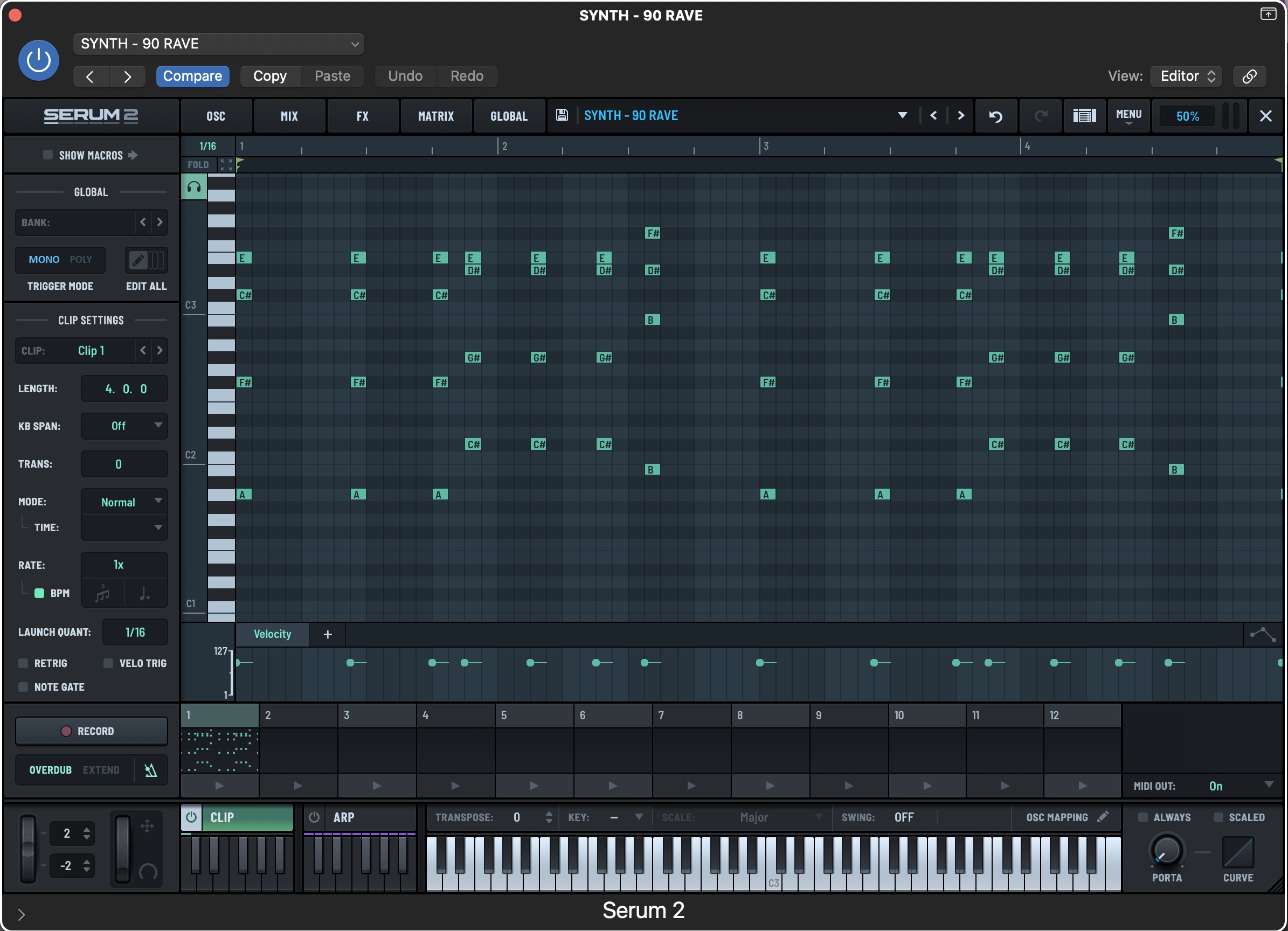
Open a MIDI pack you already own, find a progression you like, and strip it down to just the four chords — delete the rhythm, the extra notes, all of it. Now move them around. Play chord 4 first. Swap chords 2 and 3. The exact same notes can sound hopeful, sad, or tense depending on the order. Do this across five or six progressions and you start feeling chords instead of reading them off a screen.
This video breaks down a quick way to reshape a progression you didn't write into something new: An Easy MIDI Trick That Changes Your Chord Progressions.
Real chord progressions to pull apart
Written and road-tested chords and basslines across house, tech house, UK garage and speed garage. Strip them down and rearrange them in any DAW.
See the MIDI packs →2. Write Basslines Inside the Scale
Once you've got chords, the bassline is next. Stay inside the scale those chords are built from and the notes almost always work. The interesting part is the rhythm — try the same three or four notes as straight eighths, then broken and syncopated, then as a call-and-response against the chords instead of sitting under them the whole time. Same notes, three completely different basslines.
Worth a watch: 10 Rolling Basslines Every Producer Should Know (Techno, House, Trance).
3. Use Good Samples — Drums and Vocals Set the Ceiling
No amount of mixing saves a thin kick or a muddy clap. Your samples set the ceiling for how good your track can sound, full stop. A weak drum sample stays weak no matter how much EQ or compression you throw at it. The same goes for vocals — a low-quality acapella will fight you at every step.
Start with samples that already sound finished: punchy, well-balanced, properly processed. It's the single easiest way to sound more professional overnight. See Why Pros' Drums Sound So Good — 3 Secrets.
Drums and loops that already sound finished
24-bit WAV, processed and ready to drop in. Kicks, claps, hats and loops across house, tech house and speed garage.
See the sample packs →4. Learn Arrangement — It's What Turns Loops Into a Song
Great chords, a great bassline and great samples still won't make a finished track if the arrangement doesn't move. Arrangement is just deciding what plays, when, and for how long — when to strip things back, when to build, when to let the drop actually hit. It's a skill on its own, separate from sound design, and most beginners never practise it directly.
A simple exercise: take a track you love, match its tempo in your DAW, and label every section on a blank track — intro, build, drop, breakdown. That structure becomes a map you can build your own track around. A plugin like AutoChain on your bass or pad also helps the energy shifts land harder between sections — the pump itself becomes part of the arrangement.
Start here: How to Arrange EDM / Song Structure (Beginner Producer Tutorial).
5. Tutorials Get You Started. They Don't Get You Better.
YouTube is genuinely useful for learning what a tool does. It's not where you build taste, speed or instinct — that only comes from making things. Watch a tutorial to learn a technique, then close YouTube and go use it on your own track, badly, for twenty minutes. That's the part that actually builds the skill.
This one says it plainly: How to Stop Watching Tutorials and Start Making Music.
6. Make a Track Every Day, Even the Bad Ones
This is the one that moves the needle more than anything else: make a new track every single day, even when you don't feel like it. I've done this for the past year and learned more from it than from every tutorial I've watched combined. Most days the track is average. Some days it's bad. That's fine — the point is reps, not a masterpiece. Skill comes from volume, not from waiting until you feel inspired. Lower the bar. Today's track just needs to exist.
For a feel of what the daily grind actually looks like: Day 361 of Producing for a Year.
7. Steal the Blueprint: Recreate Tracks From the Stems
This is the fastest way to learn how a producer you admire actually thinks. Take a track you love, split it into stems, and pull out just the chords and the bassline. Recreate them yourself, note for note, in your own DAW. You're not copying the whole track — you're reverse-engineering one decision at a time: why that chord voicing, why the bassline sits where it does, why it hits when it hits. Those details start showing up in your own tracks without you even trying.
For the splitting part: Split Any Audio With Stem Separation.
Chords, basslines and drums in one go
MIDI and sample packs bundled together by genre — everything you need to practise all seven of these at once.
See the bundles →None of this is complicated. Chords, basslines, good source material, real arrangement, reps, and stealing from the best. Do that consistently and you'll be a noticeably better producer in a few months.